
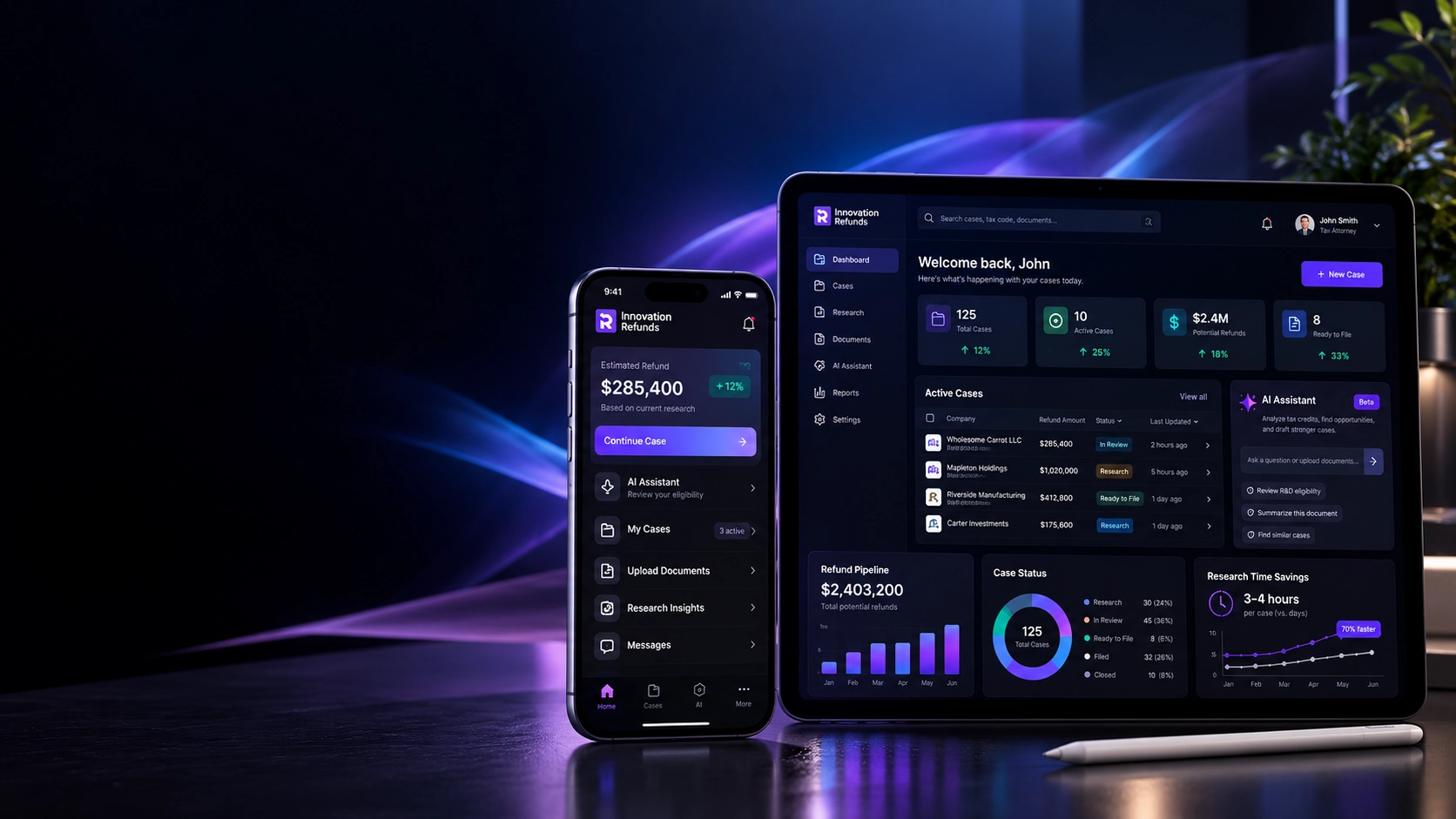
Tax guidance that feels easier to understand.
An exploratory AI Tax Attorney concept that turns complex tax-credit questions into a clear conversation, useful guidance, and an informed next step.
Explore the product screensDESIGN ARTIFACTS
From tax questions to a useful next step.
Explore original ERC workflow and intake artifacts alongside desktop and mobile Tax Partner AI concepts. The concept screens are illustrative and do not show validated eligibility decisions or tax outcomes.
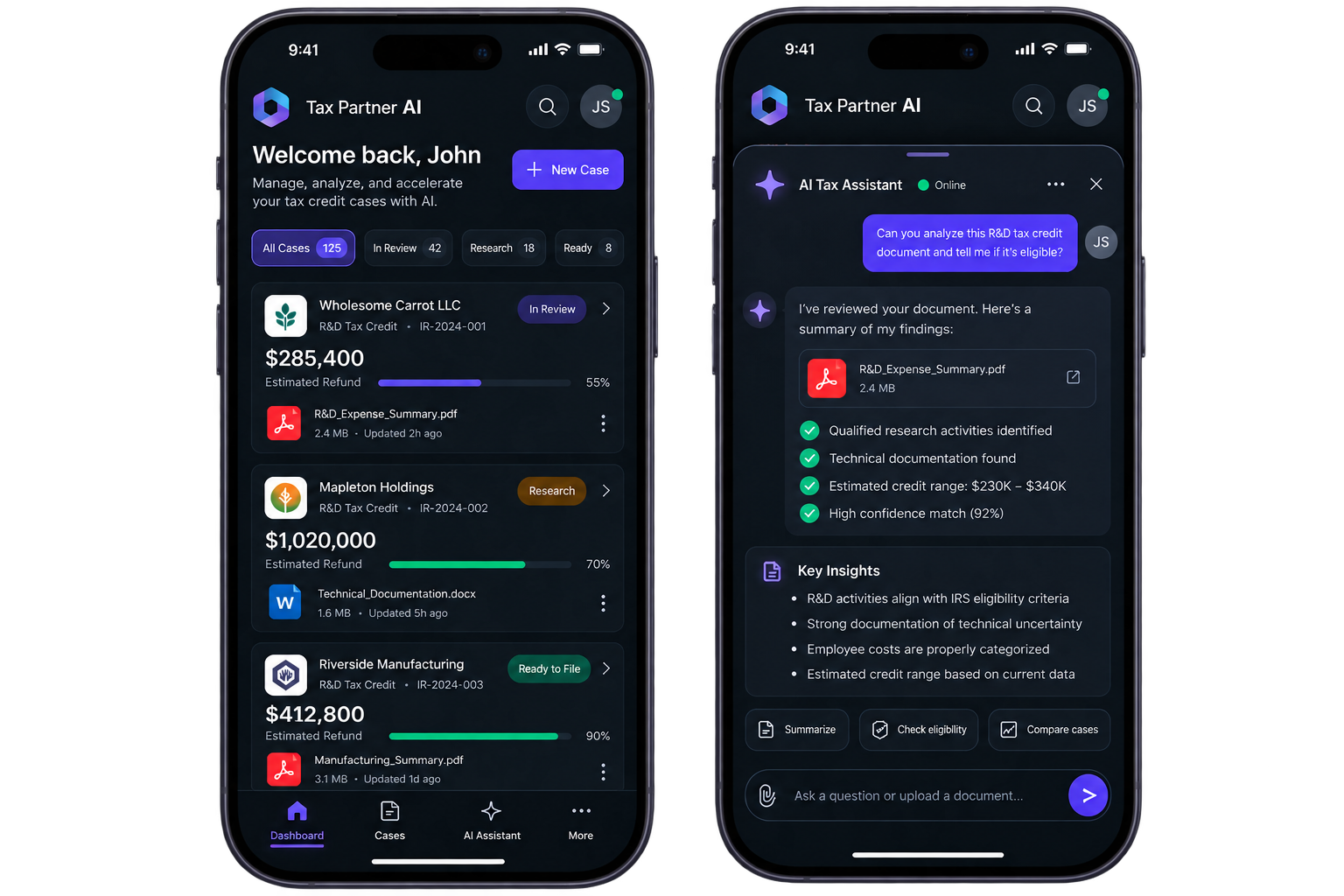
Mobile product direction
Mobile concept pairing a case dashboard with an AI assistant. Figures and eligibility language are illustrative, not verified tax outcomes.
RESEARCH FOUNDATION
Start with the real service journey.
These original Innovation Refunds artifacts show the research and service-design foundation behind the product work. They help frame the new AI concept; they are not research results or validation for the AI Tax Attorney experience.
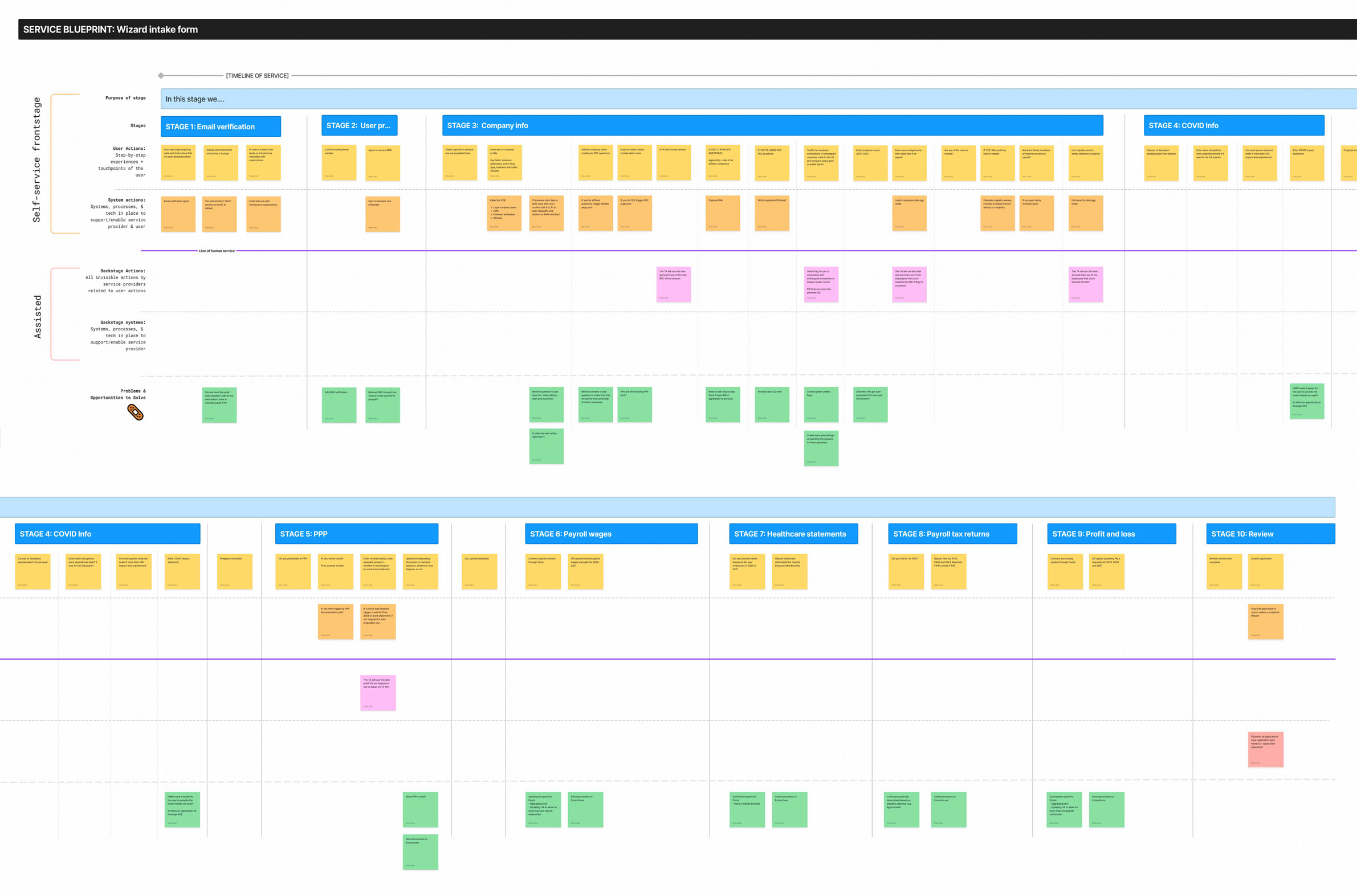
Maps the customer-facing journey to the operational steps behind it.
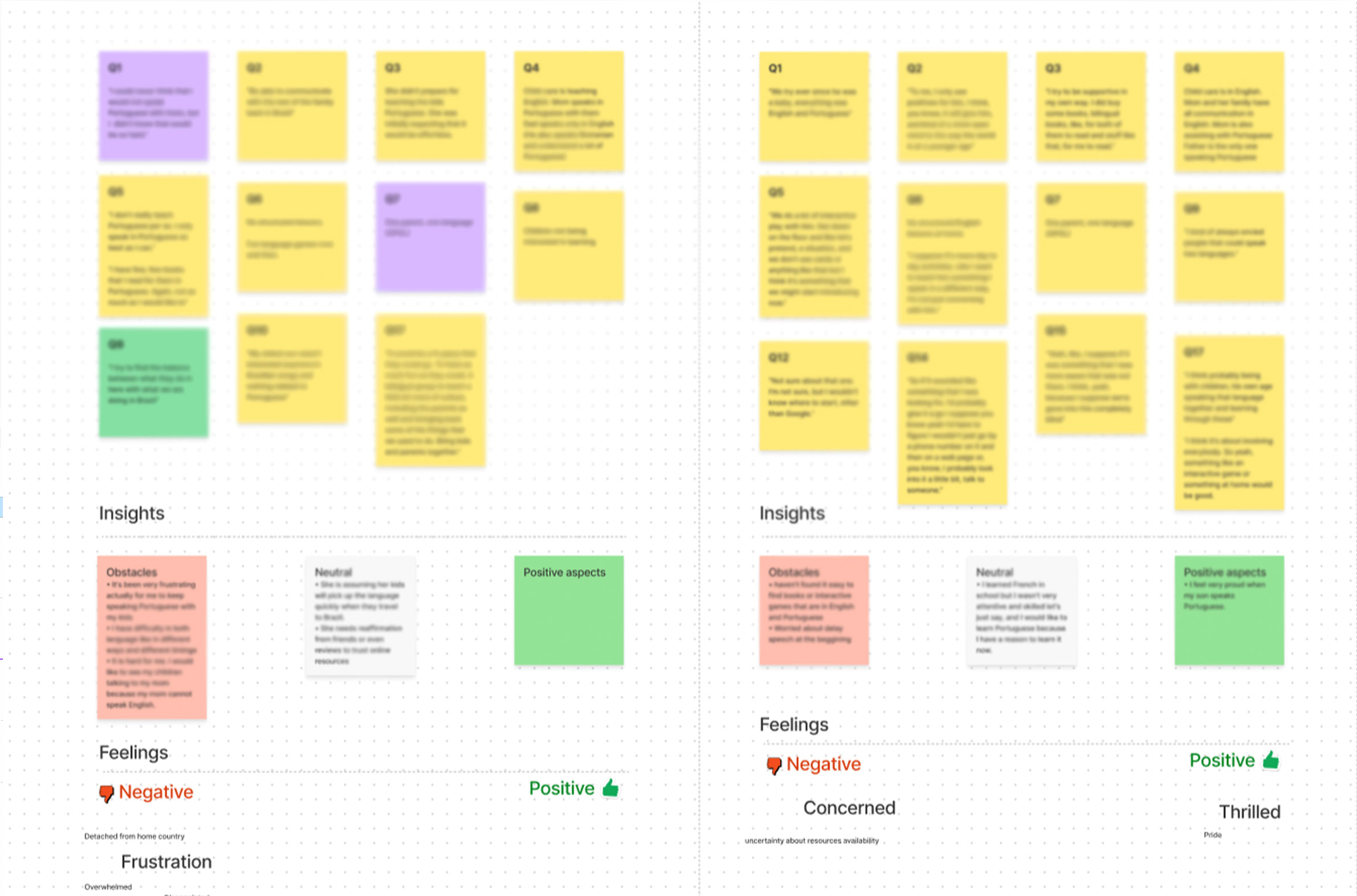
Interview synthesis from the original Innovation Refunds project.
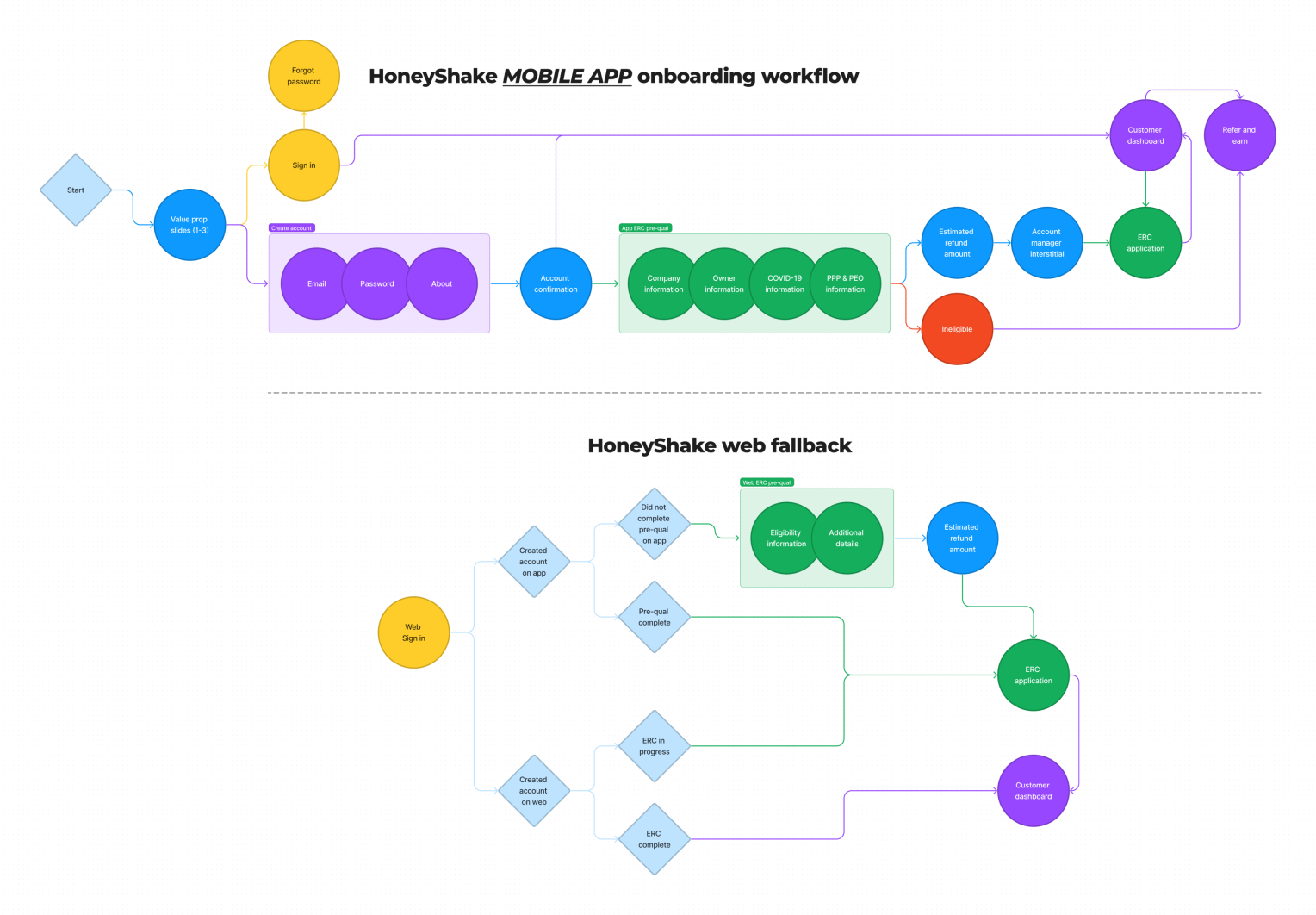
A related Innovation Refunds workflow connects mobile onboarding, prequalification, and a web fallback into the application journey.
AUDIENCE
Design for people on both sides of the question.
Two audience hypotheses guide customer understanding and expert handoff; both need validation.
Small-business owner
Understand what information may matter and what to do next without becoming a tax expert.
- Plain-language answers
- A short checklist of useful records
- A clear way to reach a specialist
AI CONCEPT
A helpful conversation with visible guardrails.
Try a sample prompt. Replies are illustrative interface copy, not tax advice or a validated AI model response.
Keep experts in the loop.
The assistant explains process and preparation. Eligibility, tax, or legal determinations go to a qualified professional.
Choose a question to preview a safer, more helpful response.
APPROACH
Build trust into every turn.
The source project documents product audit, stakeholder and user interviews, competitor review, thematic synthesis, flows, wireframes, high-fidelity design, and prototype testing. This new concept uses that foundation without implying it was part of the original tested product.
- 01Clarity
Orient before asking
Explain the assistant’s role, limits, and privacy expectations before inviting sensitive business details.
- 02Progressive disclosure
Ask in small, understandable steps
Gather only the context needed to point people toward relevant information and records.
- 03Trust & safety
Make guidance explainable
Separate general process guidance from eligibility decisions, show why a next step is suggested, and make uncertainty visible.
- 04Human handoff
Keep a human path open
Let people request an expert and pass along relevant context so they don’t have to start over.
DATA & SIGNALS
A measurement plan, not a results claim.
No project-specific performance results are documented for the AI Tax Attorney concept. These are the signals I would test before recommending broader use.
Question completion
Can people get a useful answer and continue without repeating information?
Task success · abandonmentUnderstanding
Can people explain the next step and what the assistant can’t decide?
Comprehension check · confidenceHandoff quality
Does a specialist receive enough context to continue the conversation?
Context completeness · follow-upSafe boundaries
Does the assistant recognize uncertainty and route tax or legal judgment to an expert?
Escalation review · error auditNo sample sizes, scores, or outcome percentages are presented as AI Tax Attorney results.